


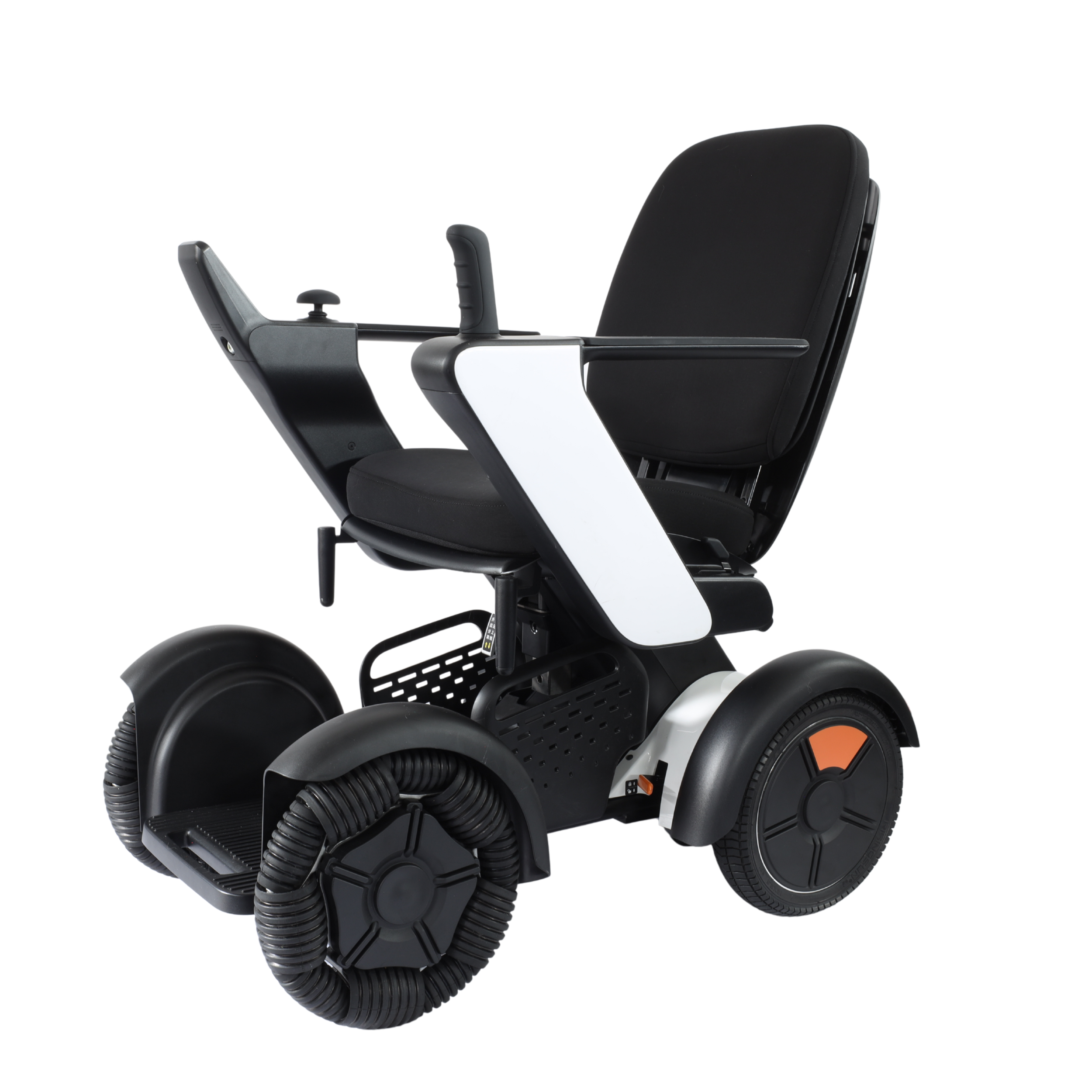
R-300 supports individuals with reduced walking tolerance, lower limb weakness, or balance impairment, to safely access home, community and everything in between.


WHO IT’S FOR
Designed around real people.
R-300 serves three audiences who each need something different from the same device.
For the User
Independence and dignity without limitation. Navigate daily life, from home hallways to community footpaths with confidence and minimal effort.
For Family & Carers
Tool-free disassembly means transport is planned around the person, not the equipment. Peace of mind knowing R-300 handles slopes, thresholds, and tight spaces reliably.
For OTs & Assessors
Certified to CE, TÜV GS, ETL, FCC, and RoHS standards. Clinically appropriate language and full technical documentation available for ACC and Enable NZ review.

KEY FEATURES
Every detail is Purposeful.
SAFETY
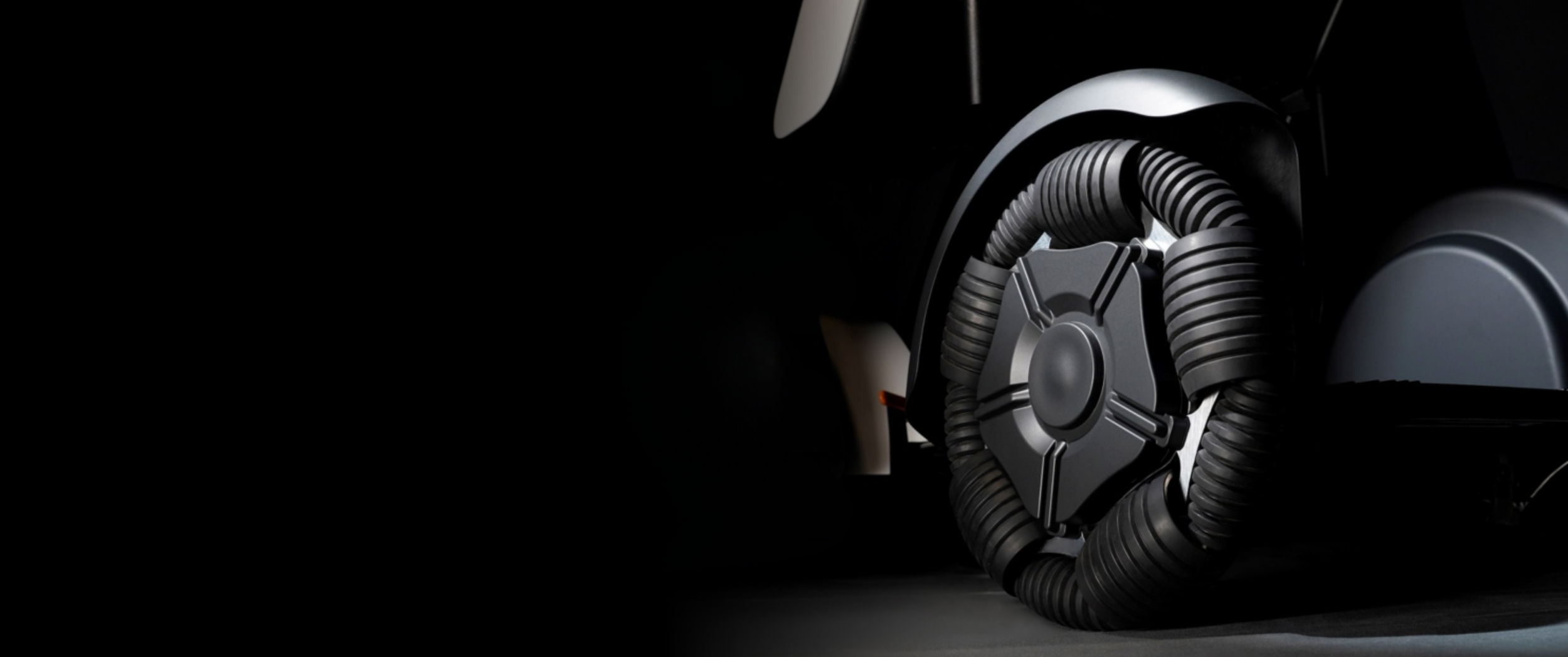
12”
All Directional Omni Wheels
12-inch omni-directional front wheels and solid explosion-proof rear tyres. Built for strength, balance and stable load support across smooth and uneven terrain.
CONTROL
Electromagnetic Braking System
Brakes engage automatically the moment the joystick is released. Supports controlled stopping and stability on slopes without requiring any manual action from the user.
STABILITY
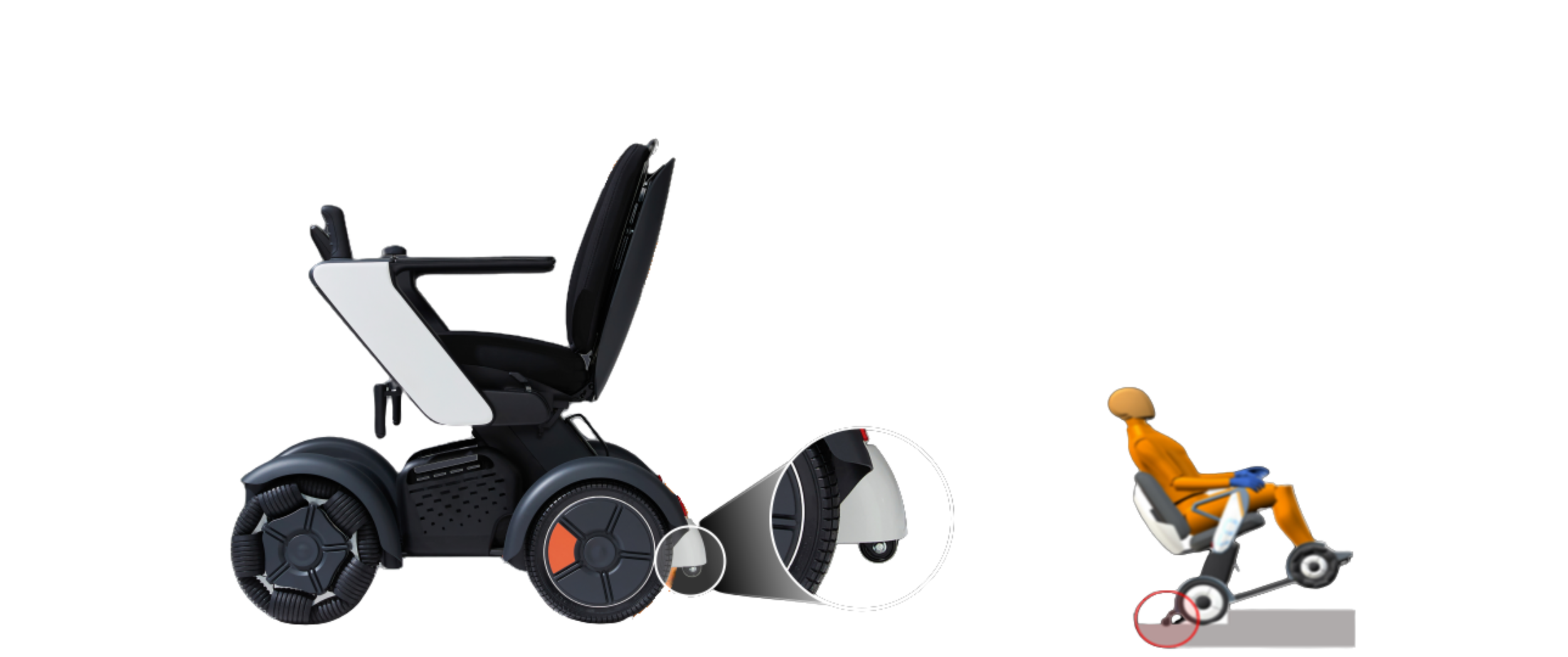
Rear Anti-Tip System
Reduces backward tipping risk on ramps, uneven surfaces, and sloped terrain. Passive protection — works automatically without any input from the user.
STABILITY
Slope Stability System
Load-sensitive stability monitoring and rear anti-tip wheels work together maintaining straight tracking on ramps and reducing backward tipping risk on uneven surfaces.
BATTERY
Automotive-Grade LiFePO4 Battery
LiFePO4 battery with intelligent Battery Management System (BMS) — compliant with UN38.3 and IEC62133. The same certifications used in automotive applications. Two options: 10Ah (18km, airline-approved) and 20Ah (30km, full-day community use). Charges fully in 5 hours.
10 Ah
STANDARD
18 km
Airline Approved
20 Ah
LONG RANGE
30 km
Full day use
SUSPENSION
Four-Wheel Independent Suspension
Each wheel responds to terrain independently, absorbing shocks from surface variations to protect against jarring impacts and reduce fatigue across longer journeys.

VISIBILITY
360° Warning Light System
High-visibility headlights and high-level and low-level rear warning lights. Improves user visibility in low-light conditions for safer community use at dawn, dusk and beyond.
SAFETY ARMREST SYSTEM
Ergonomic upper-limb support.
90°
Swing-Back Armrests with Locking Mechanism
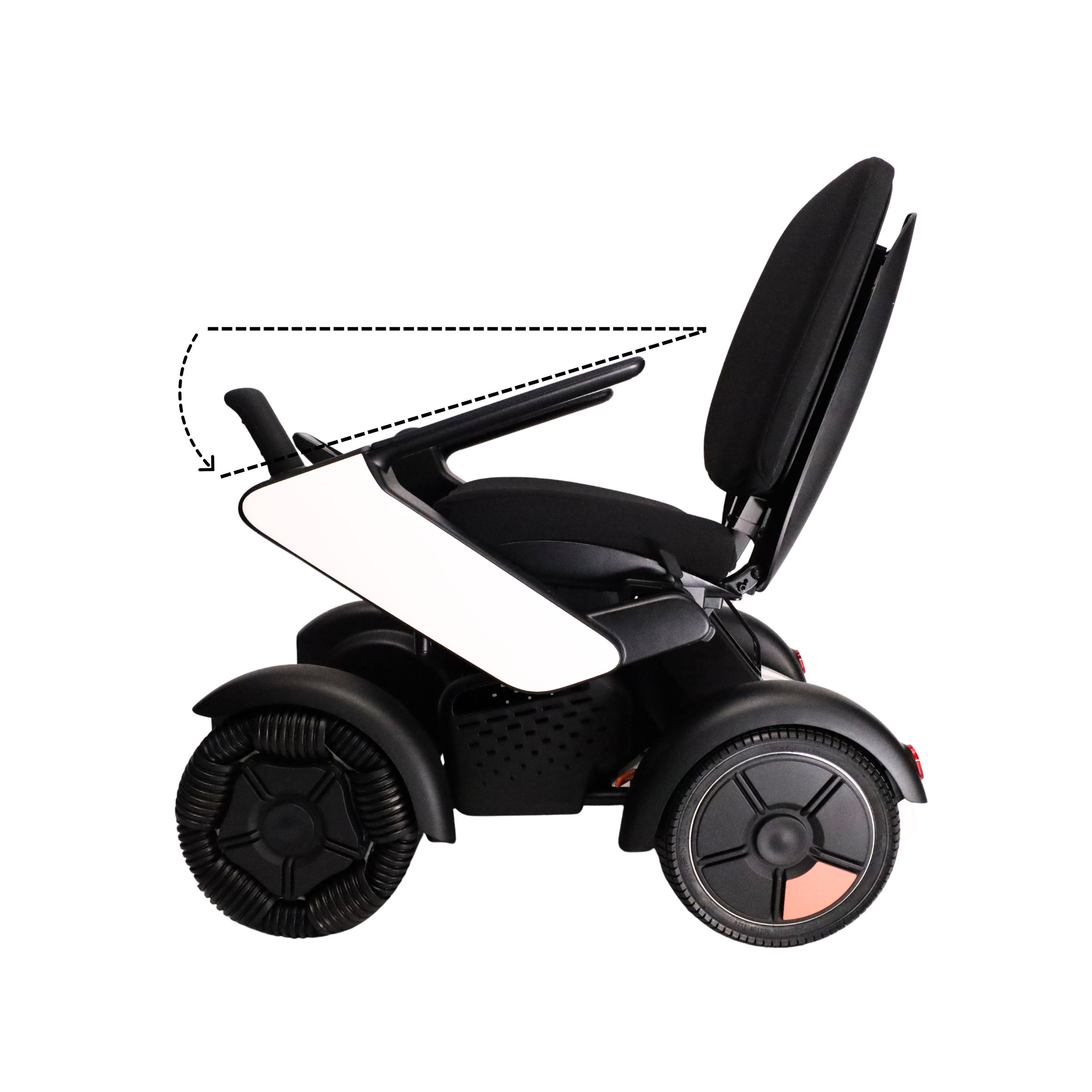
Dual-side 90° swing-back armrests with a secure locking mechanism. Provides stable upper-limb support for seated positioning and allows unobstructed side access for carers assisting with transfers. Benefits include easy side transfer access, improved carer accessibility, and secure arm support during use.
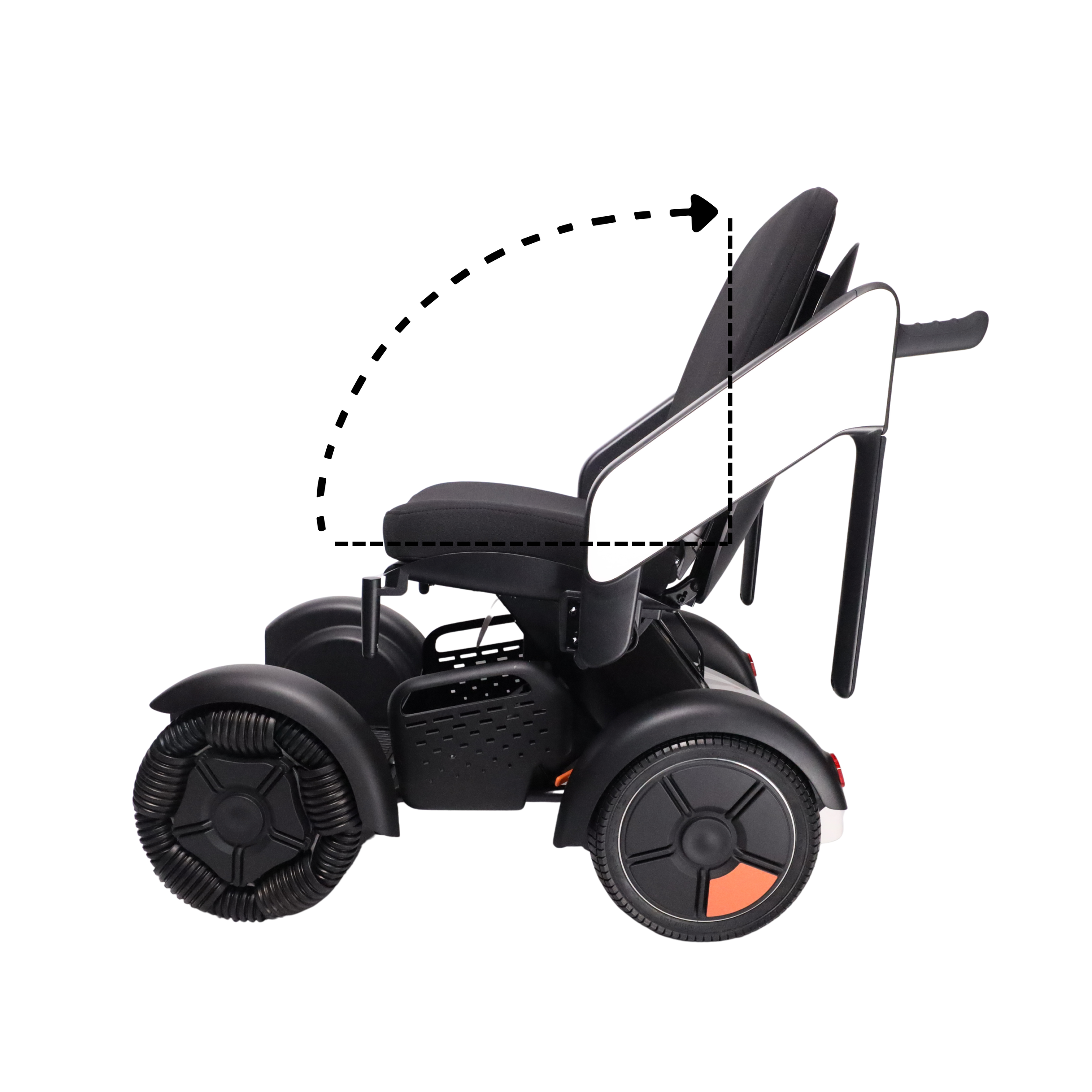
16°
Ergonomic Handle Angle
The armrest adjusts downward to 16°. This design helps users position the chair closer to tables and desks, enabling easier access for dining, reading or daily activities. Reduces the need to transfer out of the chair for seated tasks, supporting greater independence throughout the day.
The armrest system supports stable seating, reduces risk during transfers, and helps users position naturally for daily tasks — dining, reading, or desk work — without needing to transfer out of the chair.
Safety is built in,
not added on.
Rear Anti-Tip System
Reduces backward tipping risk on ramps and uneven surfaces. Passive protection that requires no user action.
Electromagnetic Auto-Brake
Engages instantly when the joystick is released — holding the chair stationary on slopes without driver input.
Load-Sensitive Stability Monitoring
Continuously monitors load distribution to improve balance on slopes and uneven ground.
BMS Battery Management
Prevents overcharging, overheating, and short-circuiting. Automotive-grade safety in every charge cycle.
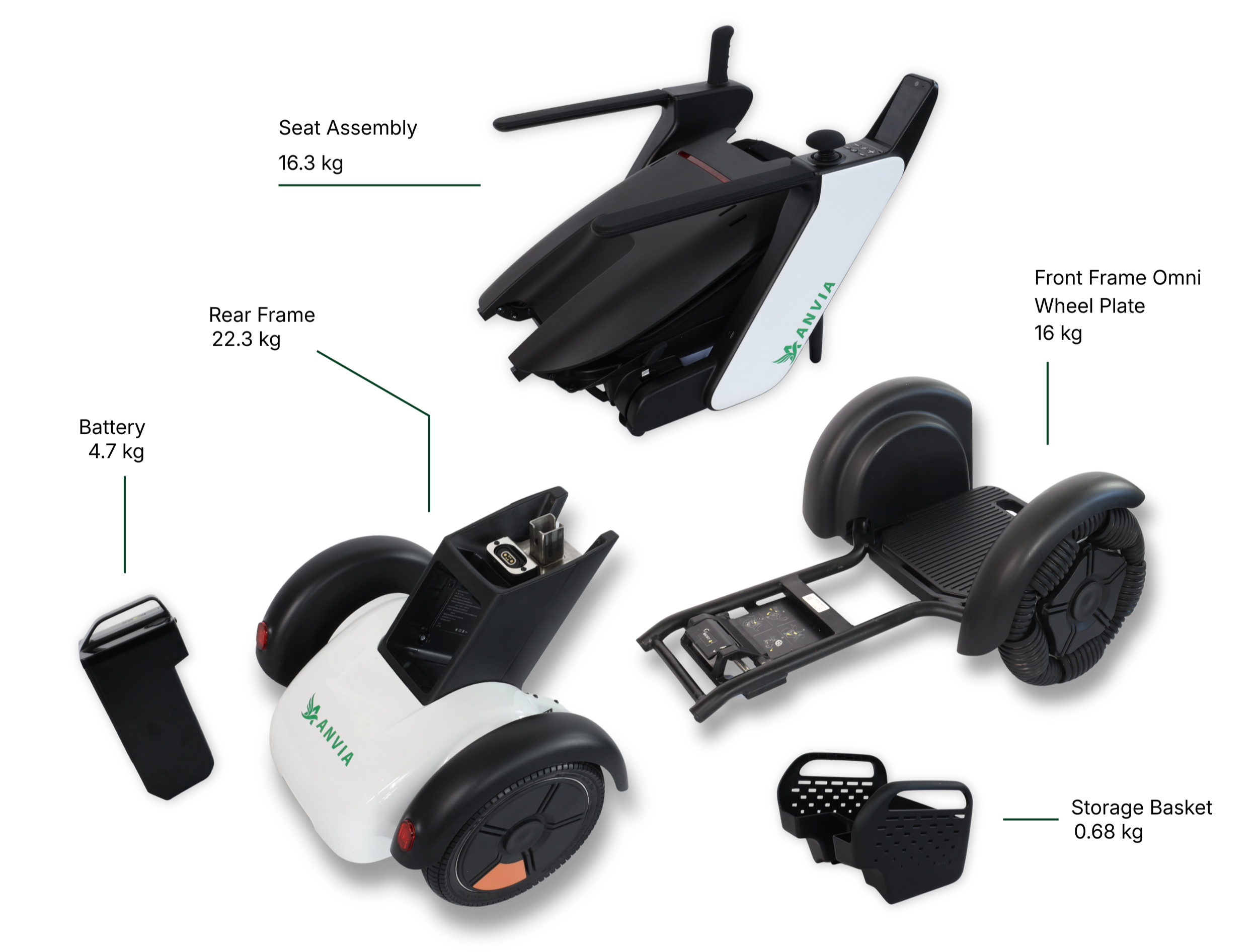
The Device consists of 5 parts.
2 Year Battery Warranty + 1 Year Powerchair Warranty
Disassembles in 4 steps. No tools needed.
R-300 separates into manageable components that fit in a standard passenger vehicle, making community access and travel genuinely achievable.
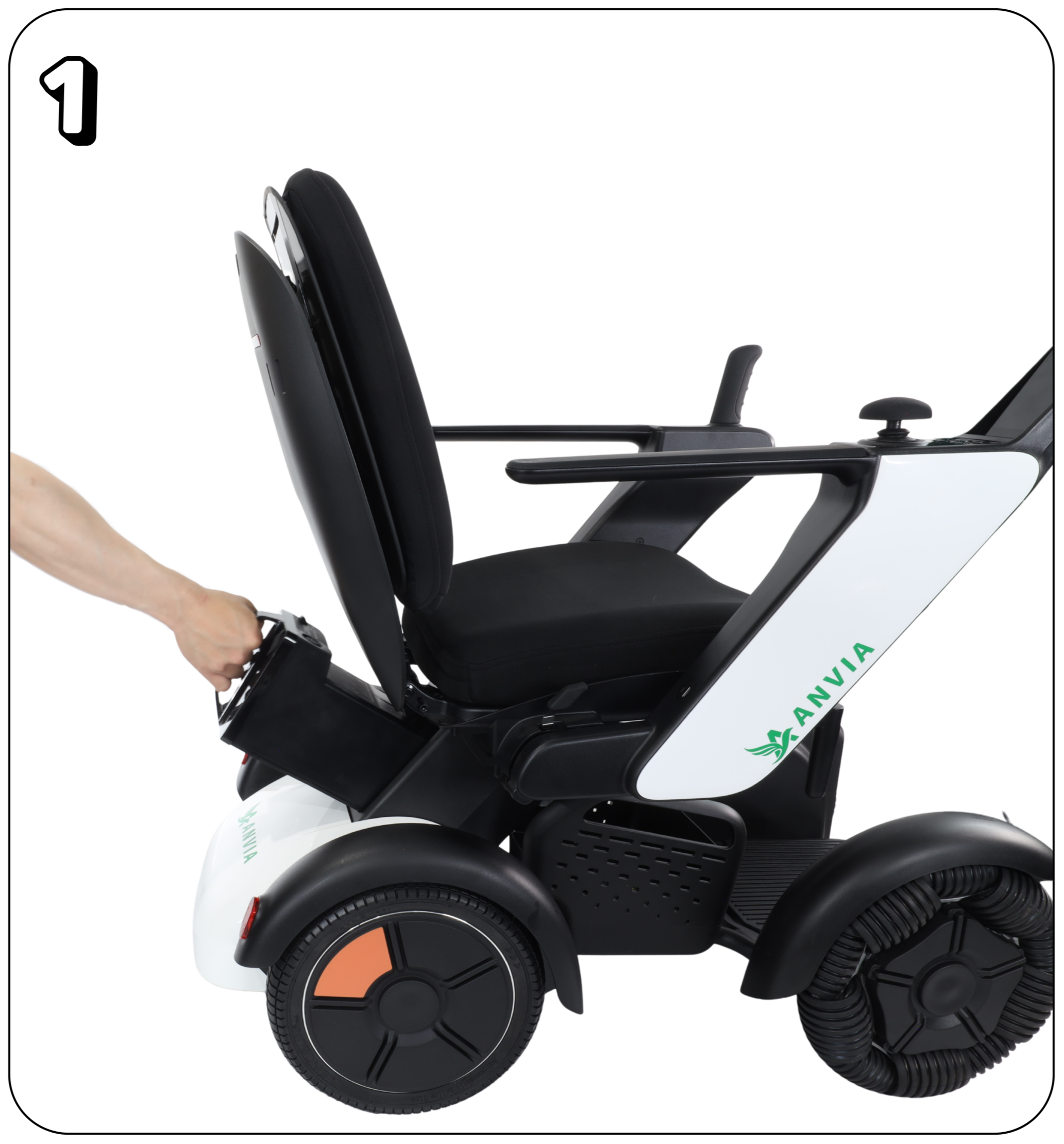
Disconnect power and pull out the battery
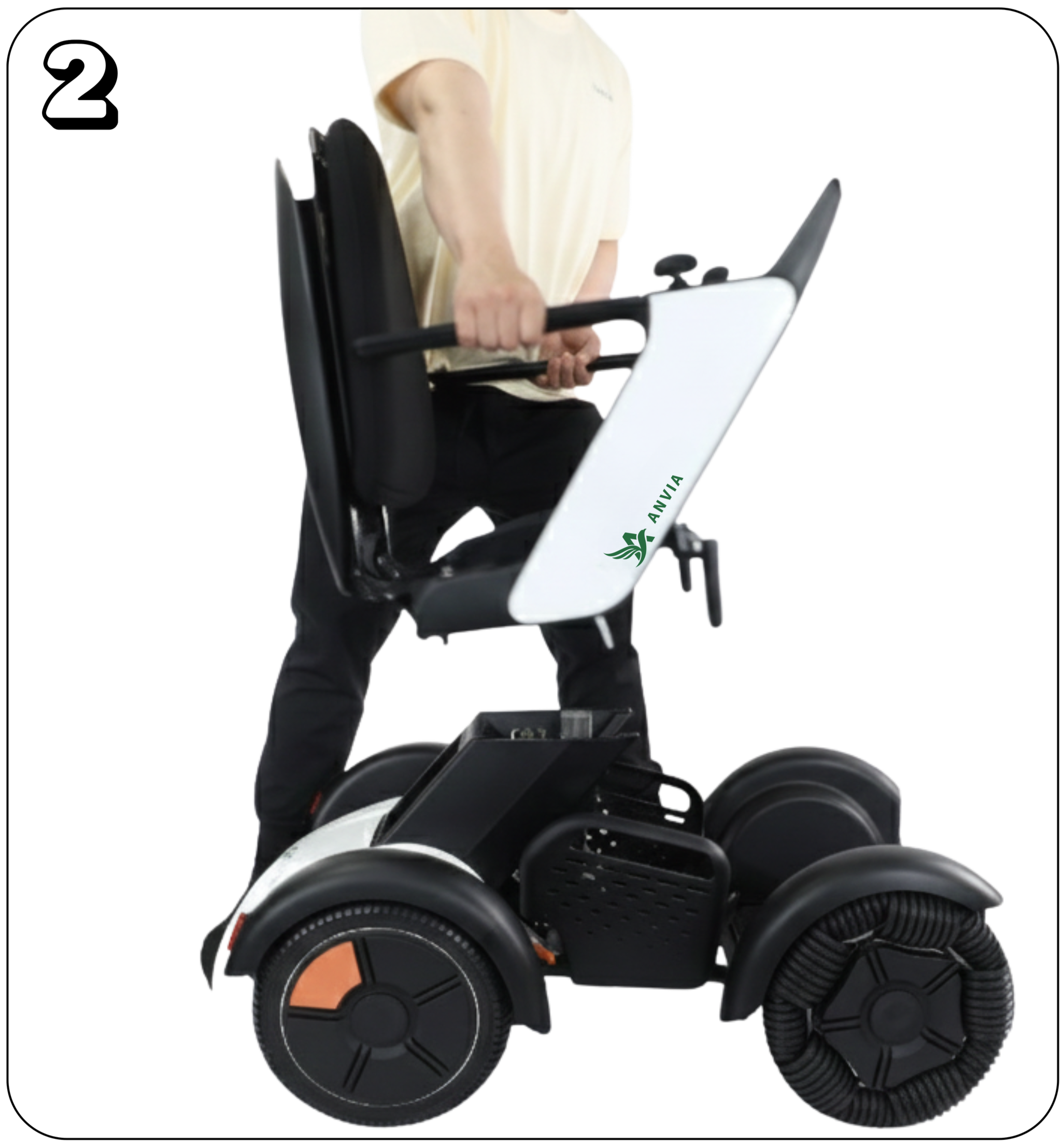
Unlock the carabiner and remove the upper part of the seat
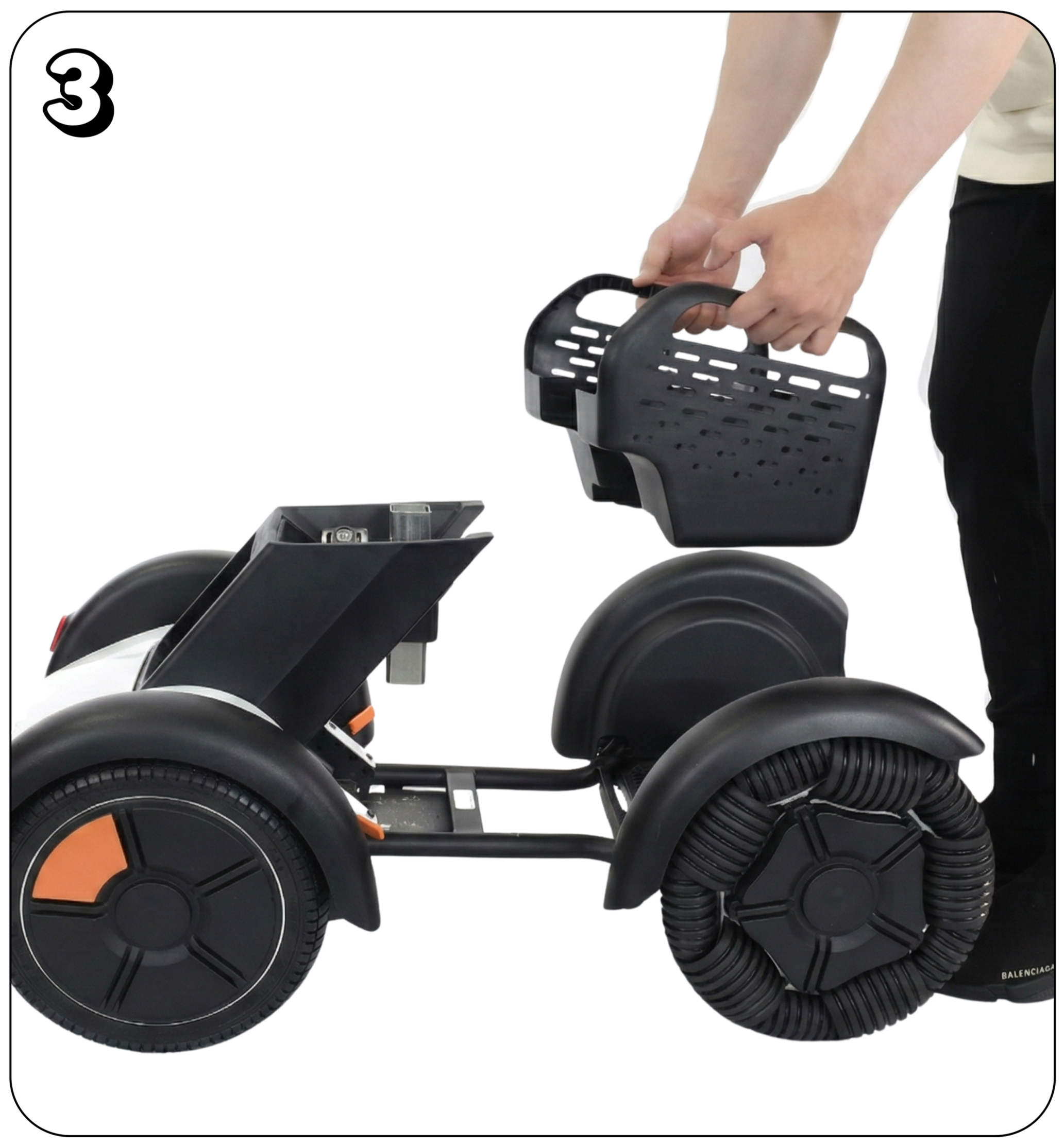
Remove the basket
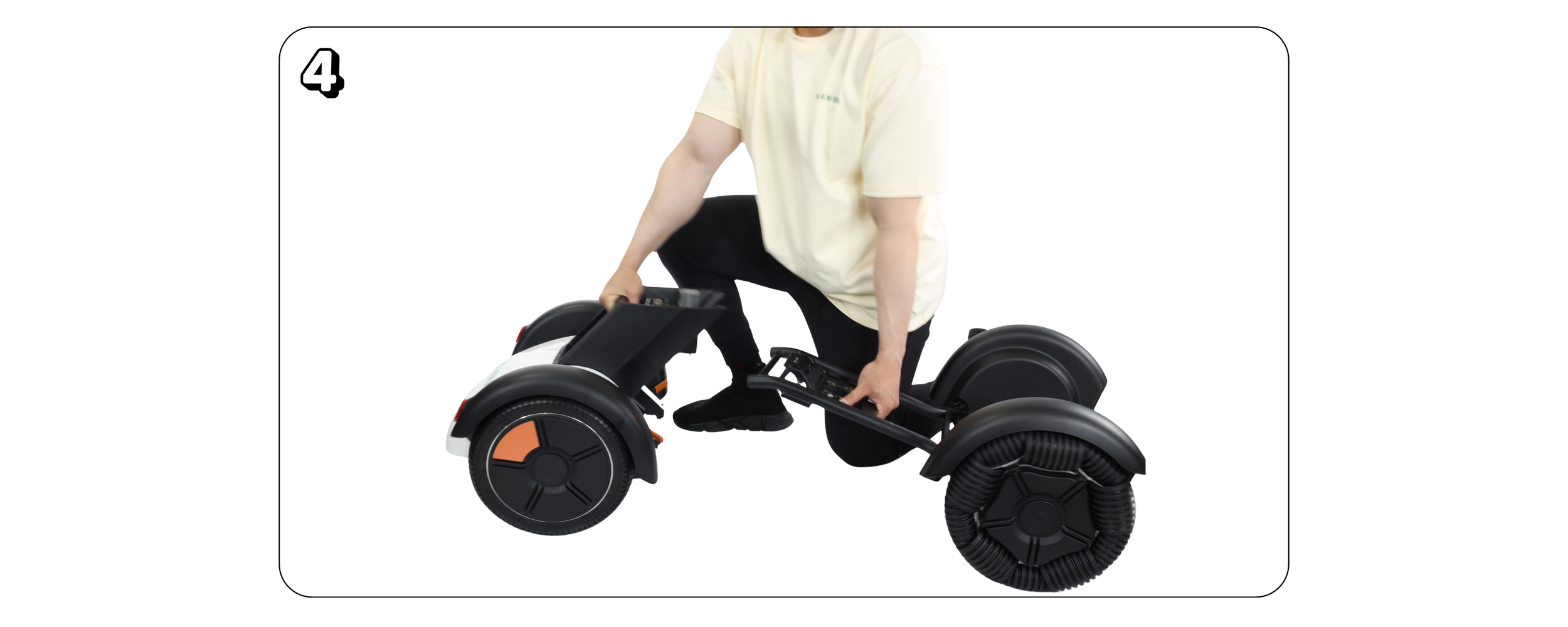
Separate Front and Rear Wheels
R-300 Safety & Compliance

Your safety, our promise. The R-300 meets the highest international standards:
“With these certifications, the R-300 ensures maximum safety, reliability, and peace of mind for every journey.”
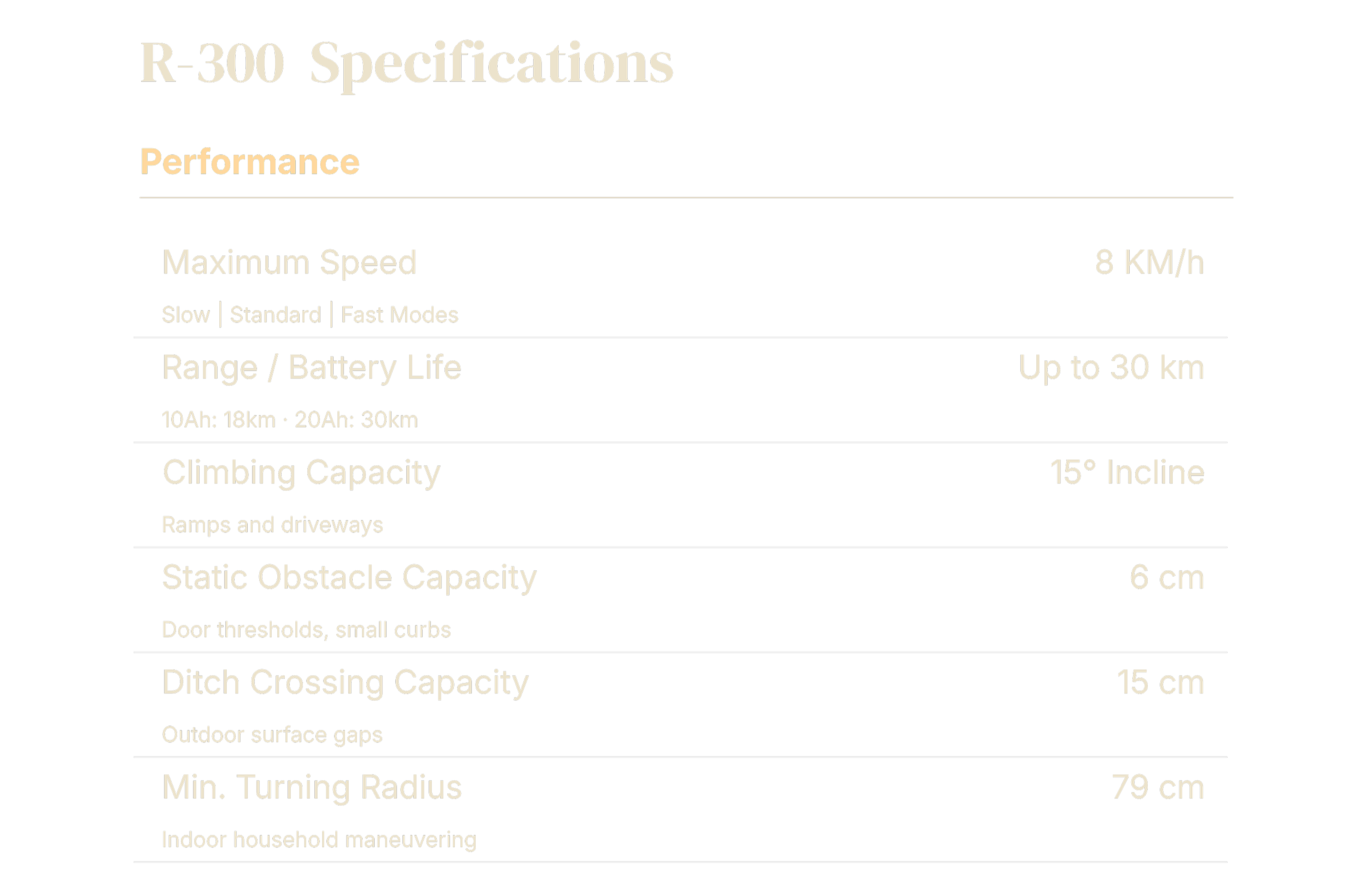
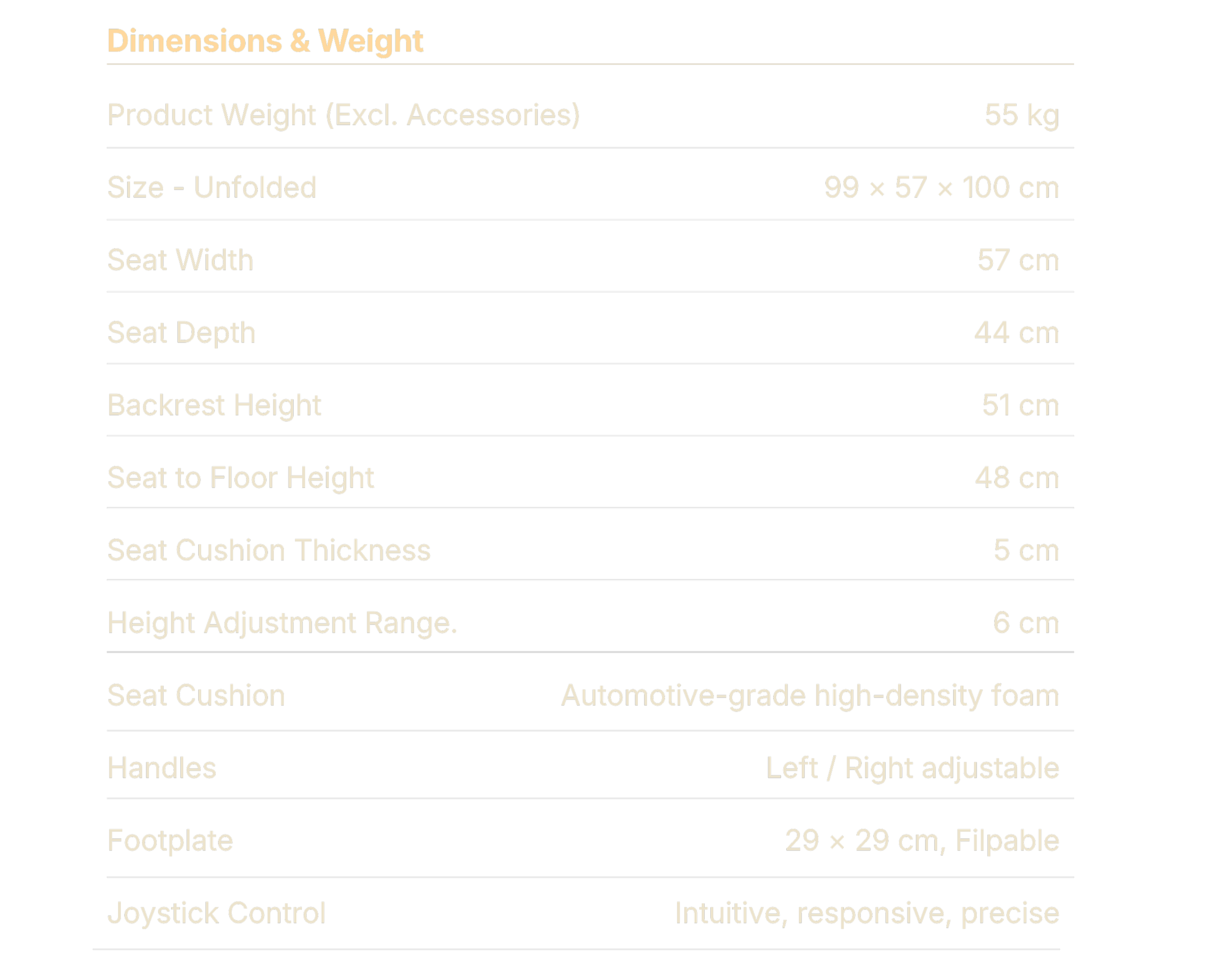
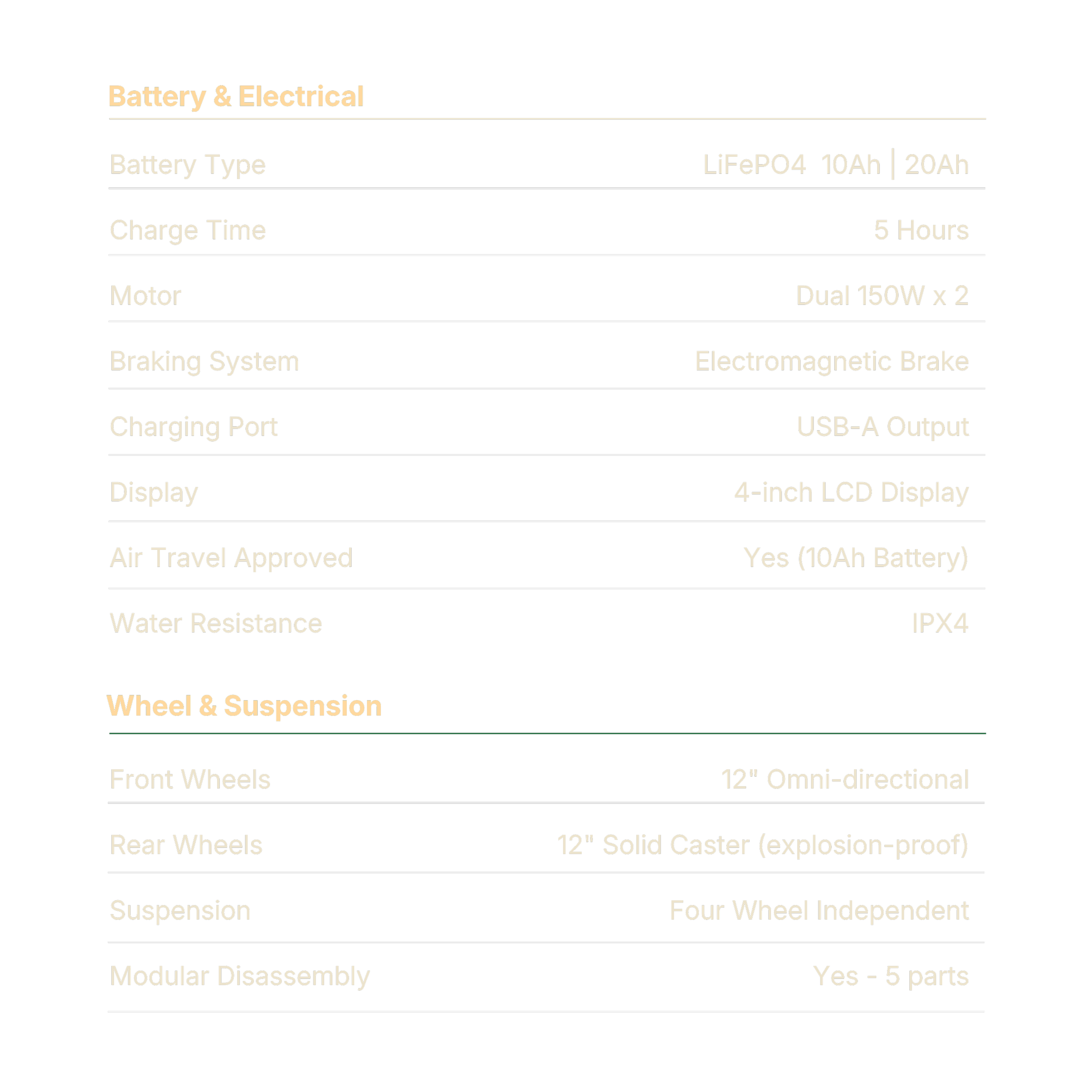
Technical Specifications
The numbers that matter.
Medical Device Safety Notice
This powered mobility chair generates an electromagnetic field as part of its braking and control systems. It is not recommended for individuals with implanted cardiac devices (including pacemakers or defibrillators).
Clinical clearance is required prior to use.
QUESTIONS & ANSWERS
Everything you need to know.
Can't find what you're looking for? Contact our team — we're here to help.
-
R‑300 Powerchair — Functional Mobility Support for Everyday Use
R-300 is designed for individuals with reduced walking tolerance, lower limb weakness, balance impairment, or mobility limitations who need powered assistance for daily indoor and community mobility. It is suitable for home environments, shopping centres, medical facilities, and community footpaths. Suitability should be confirmed through individual clinical assessment by a qualified Occupational Therapist.
-
R-300 manages smooth and even outdoor surfaces well such as footpaths, paved walkways, and controlled community environments. It handles minor surface changes including small thresholds, low curbs up to 6cm, and ditch crossings up to 15cm. It is not designed for rough terrain, steep gradients, mud, or unsealed surfaces. Suitability for specific environments should be assessed based on the user's typical routes and clinical recommendations.
-
Yes. R-300 disassembles into smaller components using a tool-free process in four steps. Components fit in standard passenger vehicles, subject to vehicle size and loading capacity. The heaviest single component is the rear frame at approximately 22.3 kg. The battery (4.7 kg) and seat assembly (16 kg) can be separated for easier loading.
-
Yes. R-300 is compatible with custom seat cushions and backrests, allowing configuration for individual postural needs, pressure management requirements, and comfort. The seating system incorporates an approximate 6-degree seat tilt to support pelvic positioning and seated stability. Seating selection should be guided by clinical assessment where specific needs are identified.
-
Suitability, configuration, and funding eligibility through ACC, Enable NZ, or WINZ is based on functional need, environmental demands, and clinical justification — not product features alone.
ANVIA supports your clinician with full documentation and trial coordination at no extra cost. R-300 is available for private purchase through anvia.co.nz while ACC pathway eligibility is being pursued.
-
R-300 comes with a 3-year frame warranty, 2-year battery and motor warranty, and 1-year device warranty. Terms and conditions apply.
Contact customerservice@anvia.co.nz for full warranty details.
R-300 features a 360-degree turning radius, non-marking wheels, and is designed for easy assembly, disassembly, and travel. It is a practical daily mobility solution for older adults, people managing arthritis, cardiac or respiratory conditions, and individuals who need powered assistance to conserve energy and maintain independence.
TAKE THE NEXT STEP
Stay in your life.
The R-300 will take you there.
Our team works alongside occupational therapists, carers, and families to confirm the right fit — no pressure, just the right guidance at your pace.
PRICE
$12,950
NZD · Includes GST
No commitment. Assessment-led. Available across Nationwide